English
Field teams often hold the most valuable operational knowledge: how a machine fails, which workaround is safe, what a customer site really looks like, and which warning signs matter. The problem is that this knowledge is spoken during work and rarely becomes documentation.
A voice-to-wiki workflow should make documentation easier without publishing raw, unverified notes.
Recommended flow
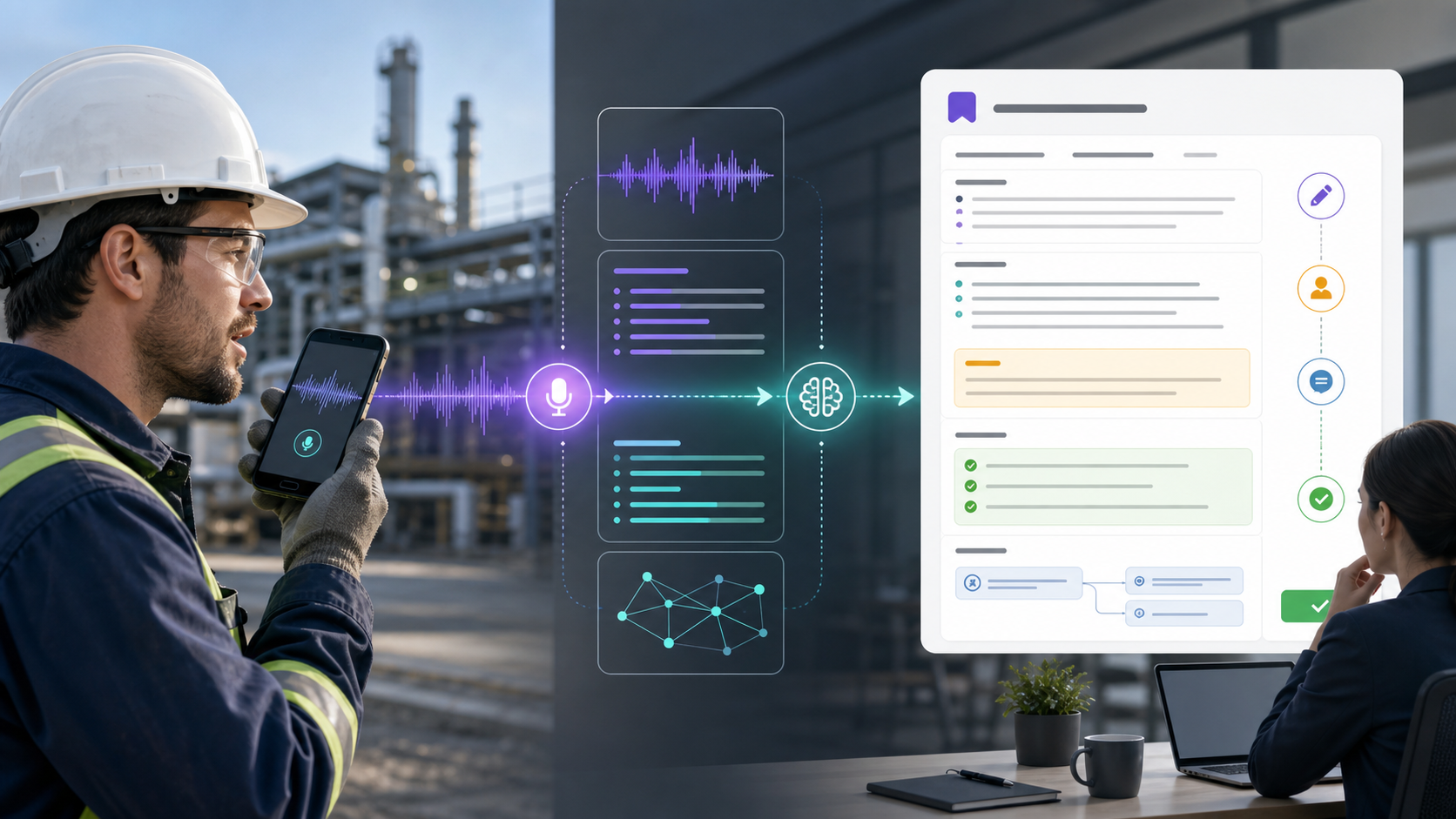
- The operator records a short note from mobile after completing the task.
- Speech-to-text creates a transcript and keeps the original audio as evidence.
- AI extracts equipment, site, issue, cause, fix, risk, parts used, and follow-up action.
- The system drafts a wiki entry using a standard template.
- A supervisor reviews, edits, and approves before publishing.
Template that works
Use consistent fields: title, context, symptoms, diagnosis, resolution, safety note, customer impact, attachments, related assets, and reviewer. The structure matters more than the prose because future search and reporting depend on it.
Common failure modes
Noisy environments create transcription errors. Operators may use shorthand that only their team understands. Sensitive customer information can leak into notes. The system should support edit-before-publish, redaction, confidence warnings, and a clear rejection path.
Business value
The payoff is faster training, fewer repeated mistakes, better handovers, and less dependency on a few experienced people. The metric is not how many notes were recorded; it is how often approved knowledge is reused to solve future work.
Tiếng Việt
Các đội hiện trường thường nắm giữ tri thức vận hành giá trị nhất: một máy hỏng như thế nào, cách khắc phục tạm nào an toàn, một địa điểm khách hàng thực sự trông ra sao, và dấu hiệu cảnh báo nào quan trọng. Vấn đề là tri thức này chỉ được nói ra trong lúc làm việc và hiếm khi trở thành tài liệu.
Một quy trình voice-to-wiki nên giúp việc tài liệu hóa dễ dàng hơn mà không xuất bản các ghi chú thô, chưa kiểm chứng.
Luồng khuyến nghị
- Người vận hành ghi âm một ghi chú ngắn từ điện thoại sau khi hoàn thành công việc.
- Chuyển giọng nói thành văn bản tạo bản ghi và giữ âm thanh gốc làm bằng chứng.
- AI trích xuất thiết bị, địa điểm, sự cố, nguyên nhân, cách khắc phục, rủi ro, phụ tùng đã dùng, và hành động tiếp theo.
- Hệ thống soạn một mục wiki theo mẫu chuẩn.
- Người giám sát xem xét, chỉnh sửa và phê duyệt trước khi xuất bản.
Mẫu hiệu quả
Dùng các trường nhất quán: tiêu đề, bối cảnh, triệu chứng, chẩn đoán, cách khắc phục, ghi chú an toàn, tác động đến khách hàng, tệp đính kèm, tài sản liên quan và người xem xét. Cấu trúc quan trọng hơn văn phong vì việc tìm kiếm và báo cáo sau này phụ thuộc vào đó.
Các lỗi thường gặp
Môi trường ồn gây lỗi phiên âm. Người vận hành có thể dùng từ viết tắt chỉ đội của họ hiểu. Thông tin khách hàng nhạy cảm có thể lọt vào ghi chú. Hệ thống nên hỗ trợ chỉnh sửa trước khi xuất bản, ẩn thông tin nhạy cảm, cảnh báo độ tin cậy, và một đường từ chối rõ ràng.
Giá trị kinh doanh
Lợi ích là đào tạo nhanh hơn, ít lặp lại sai sót hơn, bàn giao tốt hơn, và giảm phụ thuộc vào một vài người có kinh nghiệm. Chỉ số không phải là số ghi chú đã ghi âm; mà là tần suất tri thức đã duyệt được tái sử dụng để giải quyết công việc trong tương lai.